


THE SCIENCE OF SOCIETY AND ITS STRUCTURE
- Sep 16, 2025
- 2 min read
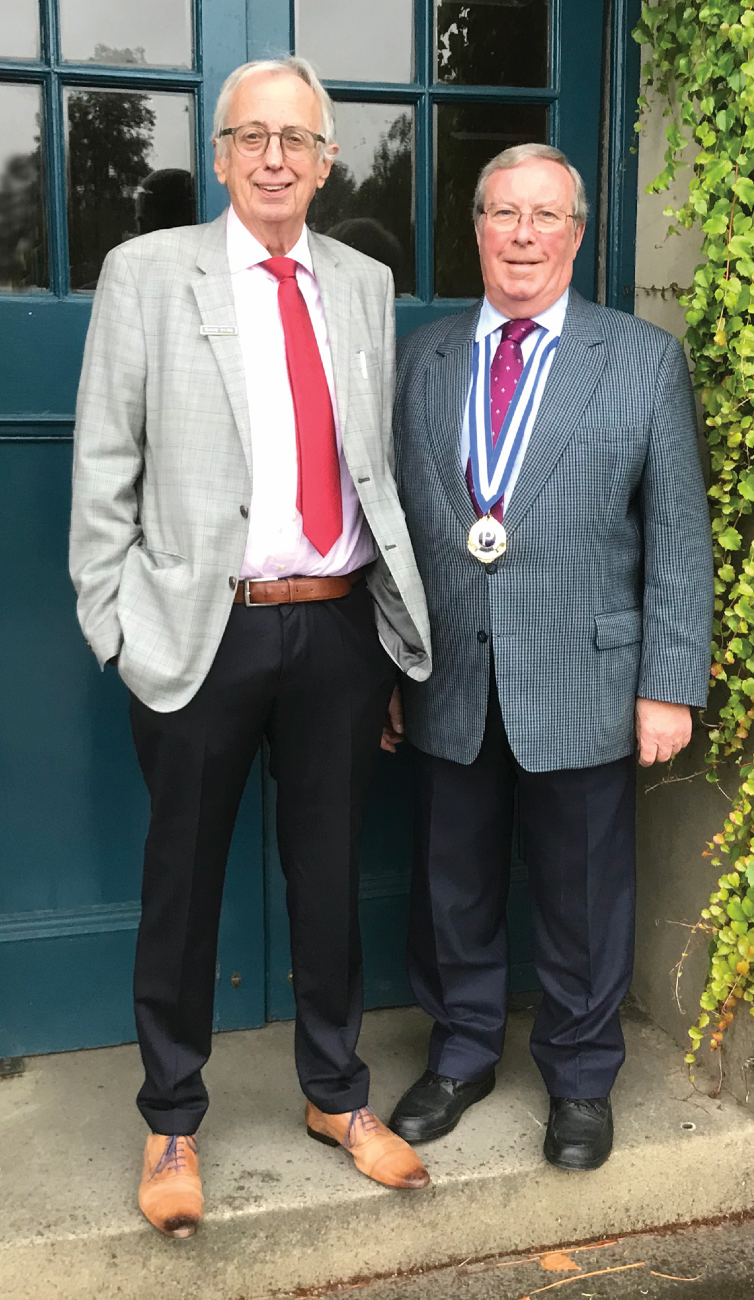
The overwhelming majority of the general public would probably experience some difficulty if asked to define the meaning of Social Sciences. This is a field of study that is often misunderstood or even a source of mystification and so, at a recent meeting of the Bakewell and District Probus Club, it fell to Club member David Webb (Emeritus Professor of Social Sciences at Nottingham Trent University) to explain this particular branch of science.
David opened his talk by describing the differences between sociology and social science. In both cases they encompass the understanding and study of the behaviour of human beings and the relationships between them. However, social science includes other related topics such as economics, psychology and anthropology.
To illustrate the diverse ways in which people react to situations that are different from their own experience and attitudes, the speaker gave a number of examples about which a more nuanced view could be taken than that commonly held. For instance, in the folk memory of the Second World War, Bomber Command has played second fiddle to the heroic endeavours of Fighter Command. This might be to do with the ideal of individual, almost chivalric, combat of the young, sometimes socially privileged fighter pilot, whereas bombers have a more industrial approach to warfare, where killing (often of civilians) is remote and less invested with glamour – and, of course, there was the residual collective guilt that ‘carpet-bombing’ was tantamount to a war crime.
Another topic was that of the traveller community. David described how the social reaction to those who are not settled, the labelling of them as ‘deviant’, the sanctioning of their life style and the shaping of travellers’ own identity as ‘outsiders’ all lead to a spiral of antagonism between the settled and the traveller – from which it becomes progressively difficult to pull back.
Finally, he considered ‘charity’, as being something of which we are all in favour. “Or are we?”, he asked. At first sight, the voluntary gift of money or time to those in need seems honourable, but there is plenty of evidence that charitable giving serves as way for the giver (especially if wealthy) to enhance their social standing, to build up their reserves of influence and to shape the direction of the lives to whom their giving is directed. Those in receipt of charity may be required to display their need, which easily places them in the position of supplicant, and may also reinforce stereotypes that certain groups are self-evidently deserving. It’s not an easy transaction (based on power), raising questions over who may in fact be benefitting from the giving of charity.
This was an interesting talk which provided much-needed clarity to the subject of Social Science.
Further details of the Bakewell and District Probus Club, including reports of earlier meetings, can be found on its website at www.bakewellprobus.org


